
Background Information
The science, the policy and the economics behind the case for action.
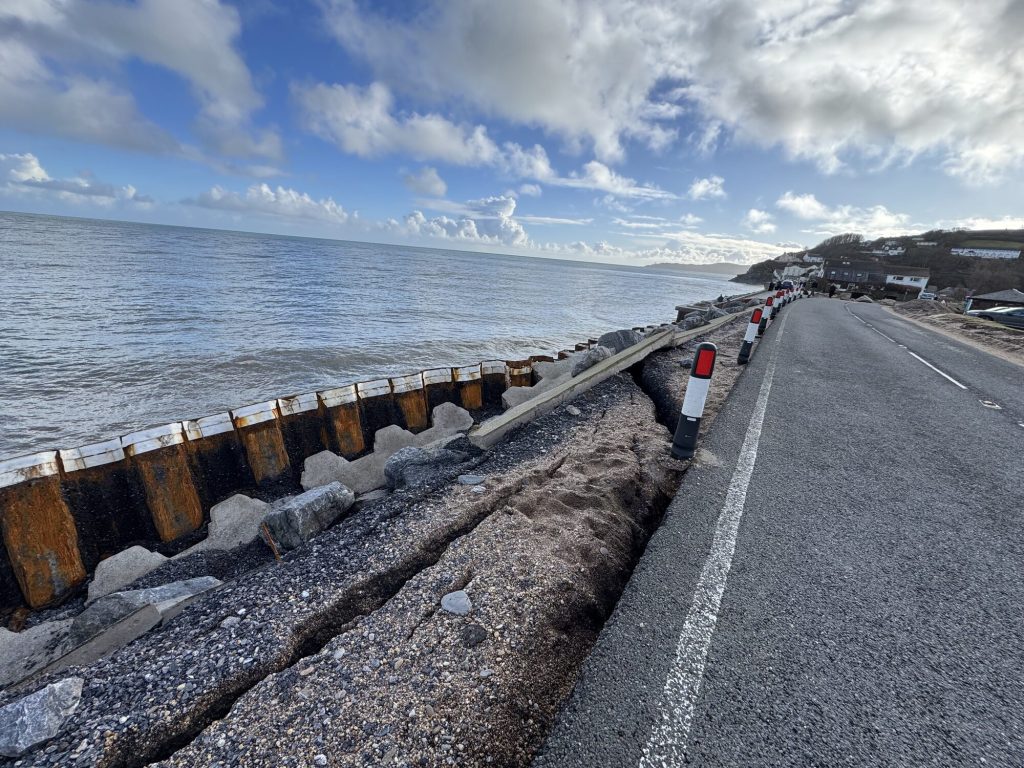
Through 2025, global sea temperatures continued to climb, and with them sea levels and the hydraulic power of the waves that reach our coast. Without large-scale action, the risk to Slapton Line only grows. The encouraging news is that the science, the policy and the economics are all now moving firmly in the direction Save Our Shoreline has long argued for.
A global shift to nature-based solutions
Coastal resilience – and the fragile line where land meets sea – has moved to the centre of the international agenda. It was a major theme at the UN Ocean Conference in Nice in June 2025, at the All-Atlantic Ocean Research and Innovation Area forum in Brussels that September, and within the EU’s Oceans and Waters Mission. Across all of them the emphasis is the same: protecting coastal communities and habitats through sustainable, offshore, nature-based solutions – exactly the kind of intervention we are advocating.
UK policy is catching up
In the UK, the national Flood and Coastal Erosion Risk Management Strategy for England, and its roadmap to 2026, now explicitly calls for combining engineered defences with working with natural processes wherever possible. Nature-based measures – including reef creation, submerged aquatic vegetation and beach nourishment – are named as valid interventions, not optional extras.
£300M
committed to nature-based solutions over ten years – the largest allocation of its kind ever made.
£10.5BN
the total UK investment in flood and coastal defences planned through to 2036.
April 2026
when key barriers to nature-based projects are lifted, opening the door to community groups and NGOs.
From April 2026, projects will no longer have to prove that protected properties shift risk bands, the old cap limiting environmental benefits to 20% of a project’s value is being removed, and a wider range of partners – including NGOs and community groups like ours – become eligible to deliver schemes. Alongside this, the government is maintaining heavy investment in conventional grey infrastructure too. Taken together, it is a decisive shift away from relying on hard sea walls and concrete alone, towards a hybrid, adaptive approach in which nature-based solutions are treated as core.
The Cost of No Action
To test the economics, we asked a former UK government economist to carry out a full cost-benefit analysis using the government’s own methodology – valuing the Site of Special Scientific Interest, the environmental resource of the coast and the Ley, and the economic worth of the A379 to the communities that depend on it.
9:1
Even using a deliberately high project estimate of £150 million – far above the £12-14 million that comparable sand engineering at Bacton in Norfolk recently cost – the analysis returned a benefit-to-cost ratio of nine to one.
In other words, acting now makes overwhelming economic sense compared with waiting for a major storm to breach the Line. The full Cost of No Action study is available to read in detail.
Save Our Shoreline is a registered charity, no. 1210048.